
Why Did Chrysler Repay Its Government-Backed Loans Seven Years Early?
A conditional federal guarantee and concessions across Chrysler's stakeholders restored liquidity and market access early, making repayment a way to save claimed interest, end oversight, and declare financial independence.
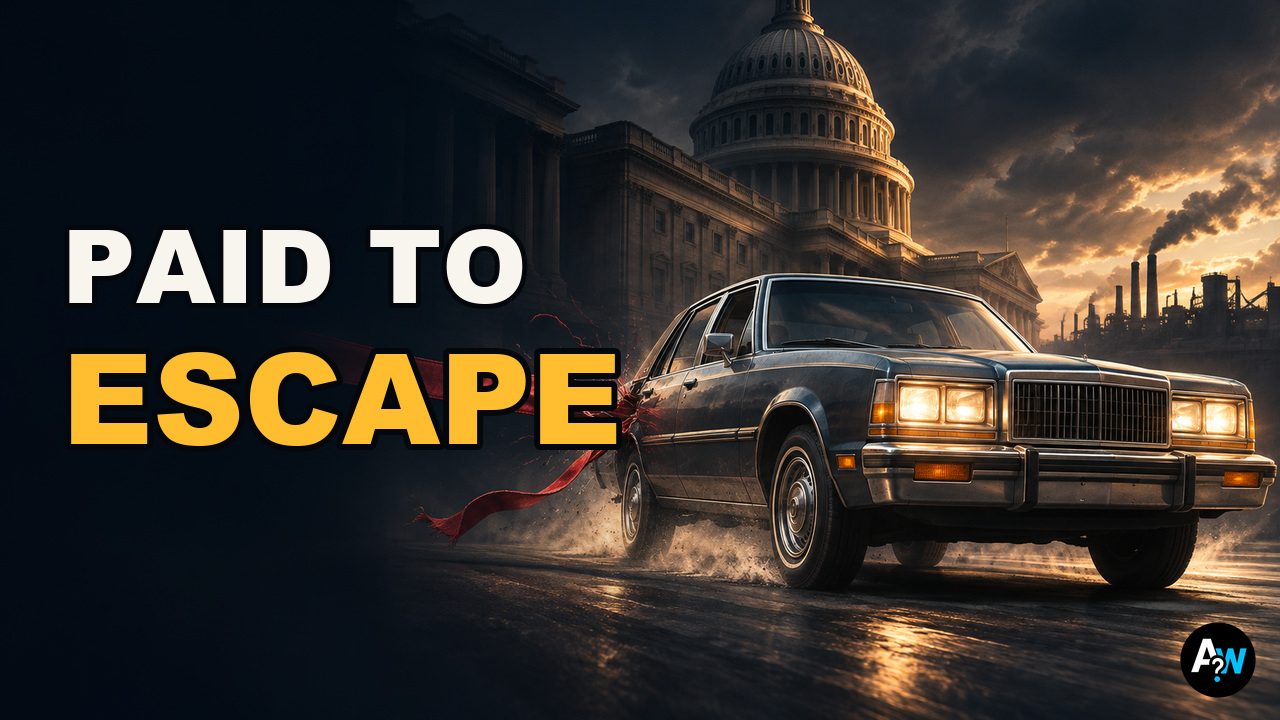
Premieres November 9, 2026 at 8:00 PM CST. The video will play here after its scheduled YouTube release.
Read the evidence, decisions, and consequences behind this investigation.
The question: The Rescue Debt Chrysler Wanted Gone
Why Did Chrysler Repay Its Government-Backed Loans Seven Years Early? In nineteen seventy-nine, Chrysler was losing money, running short of financing, and asking Washington to help keep private credit available. Yet in nineteen eighty-three, after using one point two billion dollars in federally guaranteed borrowing, Chrysler paid all of that principal back seven years before the final deadline. Then came the part that makes the comeback more complicated: paying the debt did not end the government's stake. Chrysler paid another three hundred eleven million dollars to buy back federal warrants tied to fourteen point four million shares. So this was not simply a rescued company finding extra cash. It was a company spending heavily to escape a rescue structure that had helped save it—and to prove it no longer needed the government's name behind its loans. The answer begins with what that rescue actually was.
Detroit's Weakest Giant
By the late nineteen seventies, Chrysler was the smallest of Detroit's Big Three and had less room for error than Ford or General Motors. Its trouble came from several directions at once: an aging and limited product line, major investment needs, oil shocks, demand shifting toward smaller fuel-efficient cars, heavy losses, and too little access to ordinary credit. Lee Iacocca arrived as Chrysler's president in November nineteen seventy-eight, shortly after leaving Ford. He became the public face of the fight for survival, but he inherited a problem too large for one executive—or one car—to solve. Chrysler needed money to redesign products and keep operating, but its condition made lenders reluctant to provide enough money on reasonable terms. And collapse would not stop at the company gates: employees, dealers, suppliers, lenders, and the communities around Chrysler facilities all had something at risk. Iacocca brought that argument to Washington. The political obstacle was obvious. Why should the public absorb the risk of a private automaker's mistakes? Congress's answer was not a blank check. It was a rescue designed to make nearly everyone at the table give something up first.
Congress Agrees to Cosign
President Jimmy Carter signed the Chrysler Corporation Loan Guarantee Act on January seventh, nineteen eighty. The law authorized up to one point five billion dollars in federal guarantees for loans supplied by private sources. In plain English, banks would provide the money; Washington would stand behind qualifying loans if Chrysler failed to repay. Before Chrysler could use that backing, it had to present operating and financing plans that a federal Loan Guarantee Board considered feasible. It also had to assemble roughly two billion dollars in additional commitments or concessions. That requirement spread the rescue beyond taxpayers: workers, nonunion employees, lenders, suppliers, dealers, state and local governments, and Chrysler itself all became part of the structure. The government also demanded a way to share in the upside. It received warrants—the right to buy fourteen point four million Chrysler shares at thirteen dollars apiece through nineteen ninety. That detail matters. The public guarantee carried risk, but the warrants meant taxpayers would not be limited to watching private shareholders enjoy a recovery. The rescue bought Chrysler time. But that time came with a price: a restructuring that reached far beyond the executive suite.
Everybody Pays
Treasury records identified at least four hundred sixty-two point five million dollars in union wage concessions during the relevant program period and at least one hundred twenty-five million dollars from nonunion employees. The package also included an employee stock-ownership plan, lender and creditor assistance, asset sales, and state and local support. Workers and communities absorbed wage concessions, layoffs, and plant closures. Meanwhile, Chrysler cut costs and lowered the sales level it needed to break even. That is the human cost hidden inside the word turnaround. Chrysler did not glide from crisis to comeback; it became a smaller, leaner company while thousands of households lived with the consequences. At the same time, the company needed cars people wanted to buy. The front-wheel-drive Dodge Aries and Plymouth Reliant arrived for the nineteen eighty-one model year. They offered smaller, more fuel-efficient products when Chrysler badly needed buyers to respond. But the K-cars were not a magic switch. Chrysler's recovery also depended on concessions, asset sales, operating cuts, management changes, financing, and an improving auto market. And one famous Chrysler success arrived too late to fund this payoff. The first Dodge Caravan and Plymouth Voyager minivans entered production after the final guaranteed principal payment in August nineteen eighty-three. By nineteen eighty-three, the combined restructuring and improving results had rebuilt Chrysler's liquidity and access to financial markets faster than the original rescue timetable assumed. That created a new decision: keep the cash, or use it to end the guaranteed debt early.
The Price of Independence
Chrysler made the first move on June fifteenth, nineteen eighty-three, paying four hundred million dollars of guaranteed principal. On August twelfth, it paid the remaining eight hundred million dollars in principal, along with associated interest and fees. The legal final deadline was December thirtieth, nineteen ninety, which is why the payoff was described at the time as seven years early. Iacocca said retiring the full one point two billion dollars early would save fifty-six million dollars a year in net interest, or three hundred ninety-two million dollars over seven years. That was the clean numerical argument. But contemporary analysts noted that Chrysler might have earned more by keeping and investing the cash. The other benefits were harder to fit on a check. Early repayment ended Loan Guarantee Board supervision, reinforced Chrysler's return to ordinary private financing, and signaled renewed financial health. Iacocca called the final payment a declaration of financial independence. That phrase reveals the deeper calculation. Chrysler was not merely paying interest-bearing debt. It was reclaiming control of its reputation and financial future. The government guarantee had been useful precisely because Chrysler could not borrow normally. Once the company could stand in the market without that support, keeping the guarantee risked preserving the image of a business still attached to a rescue board. So Chrysler traded liquidity for credibility. The repayment said, in the most expensive language available, that the emergency was over. Except one piece of the rescue was still on the table.
Washington Keeps the Upside
Paying the loans did not cancel the government's warrants. Those warrants still gave their holder the right to buy fourteen point four million Chrysler shares at thirteen dollars each, potentially diluting existing shareholders as the stock recovered. Chrysler wanted them retired. The government rejected an early offer it considered inadequate, then moved toward an auction intended to protect the public's interest. In September nineteen eighty-three, Chrysler bought the warrants back for three hundred eleven million dollars. That payment retired the remaining federal warrant position and removed the dilution threat. It also created an irresistible headline: taxpayers had made money on the rescue. The guaranteed loans never defaulted, and the warrant sale produced three hundred eleven million dollars for the government. But three hundred eleven million dollars in proceeds is not automatically the same as three hundred eleven million dollars in clean profit. A full accounting depends on administrative costs, fees, the risk Washington carried, and how the alternative cost of the guarantee is measured. The honest conclusion is narrower and more interesting: the guarantee got private money moving, the loans were repaid, and the warrants allowed the government to participate in Chrysler's recovery.
A Model Rescue, or a Special Case?
Chrysler's outcome made the program look like a rescue blueprint: guarantee credit, force concessions, wait for recovery, and exit with the debt repaid. But even the Reagan administration's nineteen eighty-four Economic Report warned against turning this case into a routine policy. The report argued that Chrysler might be exceptional, that bankruptcy could have produced some similar concessions, and that repeated rescues could weaken market discipline or affect competitors. That criticism does not erase what happened. It defines the limit of the lesson. Federal backing did not design the K-car, negotiate every concession, sell every asset, or persuade a customer to enter a showroom. But it did give Chrysler access to private credit while those other changes took effect. And Iacocca did not perform the turnaround alone. Workers surrendered pay, employees lost jobs, lenders and governments made commitments, management cut operations, and customers bought improved products. The comeback belonged to that whole chain—and so did its cost.
The answer: Why Chrysler Paid Early
So, why did Chrysler repay its government-backed loans seven years early? Because the conditional guarantee and a painful, broad restructuring restored Chrysler's liquidity and market access faster than expected; once they did, early repayment let the company avoid claimed interest, end federal oversight, and prove its independence. The rescue was a bridge, not a gift. Private lenders supplied the money, the government carried default risk, stakeholders absorbed concessions, and the warrants preserved public upside. Chrysler paid early because crossing that bridge had made the bridge itself unnecessary—and because cutting the last visible tie to Washington was worth more than keeping the cash. Stay sharp, Stay curious. And always ask why, guys.
Follow the record.
The complete research, fact-checking, and attribution records are preserved with this production. Public source links will be added during a future editorial source pass.
What did this story make you question?
Comments are reviewed before they appear publicly. Your email is optional and never published.