
Why Did 3M Put a Financially Healthy Company Into Bankruptcy?
Aearo entered Chapter 11 to consolidate nearly a quarter-million earplug claims, but the court dismissed the cases because the debtor was healthy and fully backed by 3M.
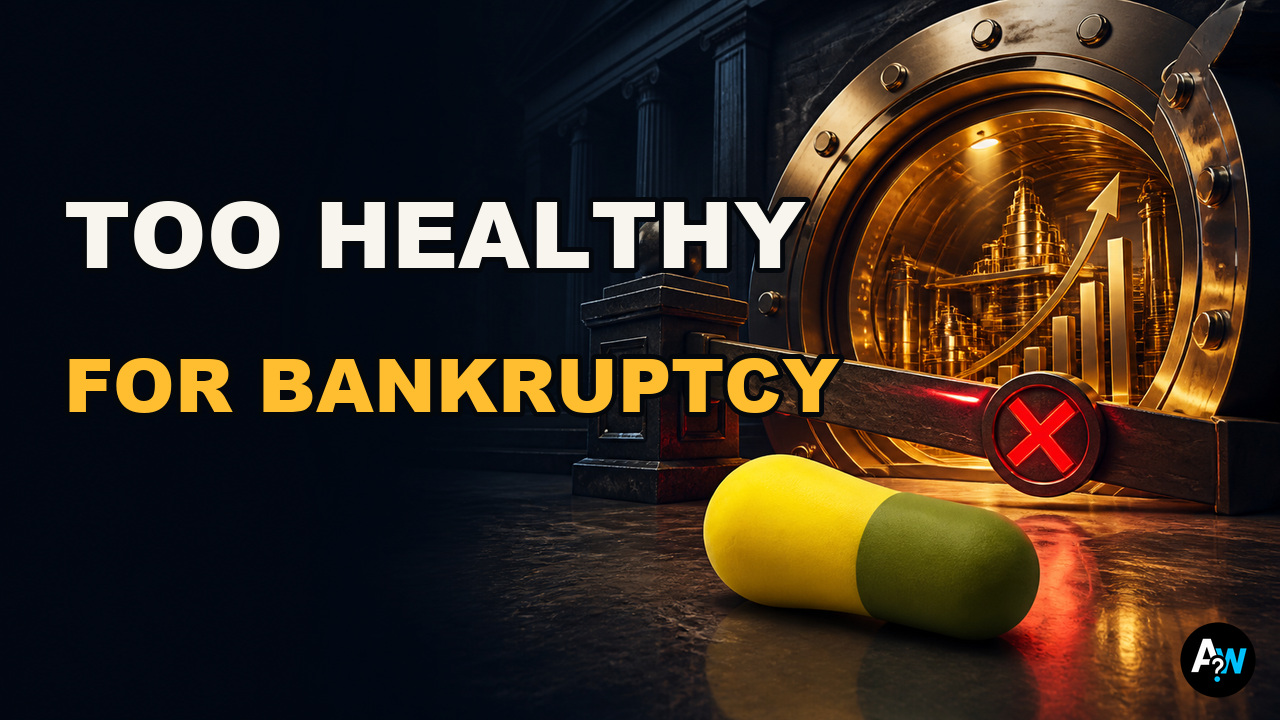
Premieres September 3, 2026 at 8:00 PM CDT. The video will play here after its scheduled YouTube release.
Read the evidence, decisions, and consequences behind this investigation.
The question: The Company That Did Not Need Saving
Why Did three-em Put a Financially Healthy Company Into Bankruptcy?
Air-oh Technologies was profitable, its sales were growing, and it was current on its obligations.
And if its liabilities became too large, a pre-bankruptcy agreement gave Air-oh access to uncapped, no-cost support from its parent, three-em, after Air-oh used most of its own assets.
Yet on July twenty-sixth, twenty twenty-two, Air-oh and six related three-em subsidiaries filed for Chapter Eleven.
As of June thirtieth, twenty twenty-two, three-em reported about one hundred fifteen thousand filed lawsuits over military earplugs, plus roughly one hundred twenty thousand more claims on an administrative docket.
Three-em said bankruptcy could replace that sprawling fight with one efficient, equitable process.
But less than a year later, a federal judge dismissed the cases without prejudice.
His reason was the contradiction at the center of the filing: on the record before the court, Air-oh was not a distressed company searching for a way to survive.
It was, in the court's word, thriving.
The Two-Sided Earplug
Air-oh Technologies made the Combat Arms Earplug Version Two, a yellow-and-olive, dual-ended hearing protector.
One end was designed to block steady noise.
The other was designed to reduce sudden impulse noise while still letting a service member hear the world around them.
The settlement administrator identifies Version Two earplugs manufactured from nineteen ninety-nine through twenty fifteen. Separate reporting places military use from two thousand three through twenty fifteen.
On April first, two thousand eight, three-em acquired Air-oh for approximately one point two billion dollars, including assumed debt.
Ten years later, that acquired business was tied to a legal problem of extraordinary scale.
In July twenty eighteen, three-em paid nine point one million dollars to resolve a federal False Claims Act case initiated by whistleblower Moldex-Metric.
The government alleged that three-em and predecessor Air-oh knew the earplug was too short to fit properly in some users' ears and could loosen without the wearer noticing.
But the settlement was not an admission. The Justice Department explicitly said those were allegations and there had been no determination of liability.
That distinction matters, because the next cases were not automatically decided by the government's settlement.
A Quarter-Million Claims
Veterans and service members brought product-liability claims alleging that the earplugs contributed to hearing loss and tinnitus.
Three-em maintained that the product was safe and effective when properly used, disputed causation, and argued that the mass-litigation system included large numbers of unvetted claims.
On April third, twenty nineteen, the federal cases were centralized in the Northern District of Florida before Judge M. Casey Rodgers as multidistrict litigation number twenty-eight eighty-five.
An M-D-L is not one giant lawsuit with one automatic verdict.
It is a system for coordinating common pretrial work across many individual cases.
To test the evidence and likely outcomes, the court held sixteen bellwether trials.
In June twenty twenty-three, the bankruptcy court recorded ten plaintiff verdicts involving twelve claimants and six defense verdicts. It described claimant awards ranging from one point seven million to seventy-seven point five million dollars.
These trials did not decide every remaining claim, but they showed both sides what individual juries might do.
By the time of the bankruptcy filing, three-em reported about one hundred fifteen thousand filed cases and another one hundred twenty thousand administrative claims. Later settlement materials described nearly two hundred fifty thousand lawsuits and claims.
Those are different snapshots with different definitions, not one timeless count.
Using a May twenty twenty-three federal court report, the bankruptcy court said the M-D-L represented roughly thirty percent of all cases then pending in federal district courts.
For three-em, this was the obstacle: even after years of coordinated litigation, the company argued there was no practical way to evaluate and try so many claims one by one.
Why Bankruptcy Looked Like an Answer
Chapter Eleven offered a different machine.
Instead of continuing hundreds of thousands of cases across an open-ended timetable, Air-oh could propose a court-supervised trust and a common process for resolving claims.
The bankruptcy filing would automatically pause litigation against Air-oh, and Air-oh also sought protection from the earplug cases against three-em even though the parent company itself had not filed for bankruptcy.
Three-em publicly committed one billion dollars to the proposed trust, another two hundred forty million dollars for related case expenses, and additional support under a broader funding agreement.
The company presented that route as more efficient, more certain, and more equitable than continuing the M-D-L.
Claimants saw something very different: a solvent corporate family trying to move their cases away from the court where juries had already returned more plaintiff verdicts than defense verdicts.
And there was one crucial legal detail.
Three-em did not put itself into Chapter Eleven.
The legal debtors were Air-oh and related subsidiaries, though the bankruptcy court found that three-em had heavily influenced the decision, and three-em publicly announced and funded the strategy.
The title says three-em put a company into bankruptcy because three-em owned the debtors, drove the plan, and supplied the money. But the parent remained outside the case.
The Guarantee That Undid the Plan
Chapter Eleven can give a struggling business time to preserve value, reorganize debts, or negotiate a viable future.
But Air-oh's own evidence described a business with increasing sales, positive earnings, bills paid on time, and little operational disruption from the litigation.
Then there was the funding agreement.
Before filing, three-em promised Air-oh uncapped, no-cost support sufficient to pay covered liabilities whether Air-oh stayed in bankruptcy or left it, after Air-oh used most of its own assets.
In other words, the proposed debtor had arrived in court with access to the resources of the parent company that wanted protection from the lawsuits.
The bankruptcy court refused to extend the automatic stay to three-em.
Then, on June ninth, twenty twenty-three, Bankruptcy Judge Jeffrey J. Graham dismissed Air-oh's Chapter Eleven cases without prejudice.
On the record before him, he found no valid reorganization purpose. The company was financially healthy, the litigation had not materially disrupted its business, and the same kind of settlement could be built through the M-D-L.
The judge characterized the filing as a litigation-management tactic, not a rehabilitative effort needed to rescue the debtor.
But the ruling was narrower than the headline.
It did not decide that every earplug claim was valid.
It did not say a financially solvent company can never use Chapter Eleven.
And because the dismissal was without prejudice, Air-oh could return if its circumstances materially changed.
The court's conclusion was specific: this company, with this financial backing, did not presently need bankruptcy protection.
The Settlement Outside Bankruptcy
The lawsuits still needed an ending.
Less than three months after the dismissal, three-em and the plaintiffs' leadership announced a settlement valued at approximately six billion dollars.
It was designed to resolve the federal M-D-L, coordinated state cases in Minnesota, and certain eligible future claims, without an admission of liability or wrongdoing by three-em.
The initial structure called for five billion dollars in cash and up to one billion dollars in three-em stock, paid over time through twenty twenty-nine.
In January twenty twenty-four, three-em elected to replace that potential stock component with cash.
Three-em later reported that more than two hundred fifty thousand eligible claimants had chosen to participate and said it expected the agreement to resolve more than ninety-nine percent of the claims.
That is the company's reported expectation, not proof that every claimant has already received a final payment. The contribution schedule continues through twenty twenty-nine.
Three-em's later S-E-C filings also said the remaining Air-oh bankruptcy appeals had been dismissed by the Seventh Circuit.
The bankruptcy route was over.
The global resolution moved forward through the M-D-L system that bankruptcy had been meant to replace.
The answer: Why 3M Chose Chapter 11
So, why did three-em put a financially healthy company into bankruptcy?
Because Air-oh's financial health was not the problem three-em was trying to solve.
The problem was the scale, uncertainty, and duration of nearly a quarter-million earplug claims.
Chapter Eleven appeared to offer one forum, one trust, one pause, and one bounded process in place of that sprawling litigation.
But the very funding promise that made the plan look fair also helped prove that Air-oh did not need financial rescue.
The court rejected bankruptcy because the debtor was healthy and fully backed, not because it resolved the underlying earplug dispute.
And the final irony is that the M-D-L ultimately produced the multibillion-dollar settlement that Chapter Eleven did not.
Three-em chose bankruptcy to manage litigation. The court dismissed it because Air-oh did not need reorganization.
Stay sharp, Stay curious. And always ask why, guys.
Follow the record.
The complete research, fact-checking, and attribution records are preserved with this production. Public source links will be added during a future editorial source pass.
What did this story make you question?
Comments are reviewed before they appear publicly. Your email is optional and never published.