
Why Was Iridium’s $5 Billion Satellite Network Sold for Just $25 Million?
Iridium separated a still-useful satellite network from a failed mass-market business model, letting a bankruptcy buyer rebuild it around customers who needed remote coverage.
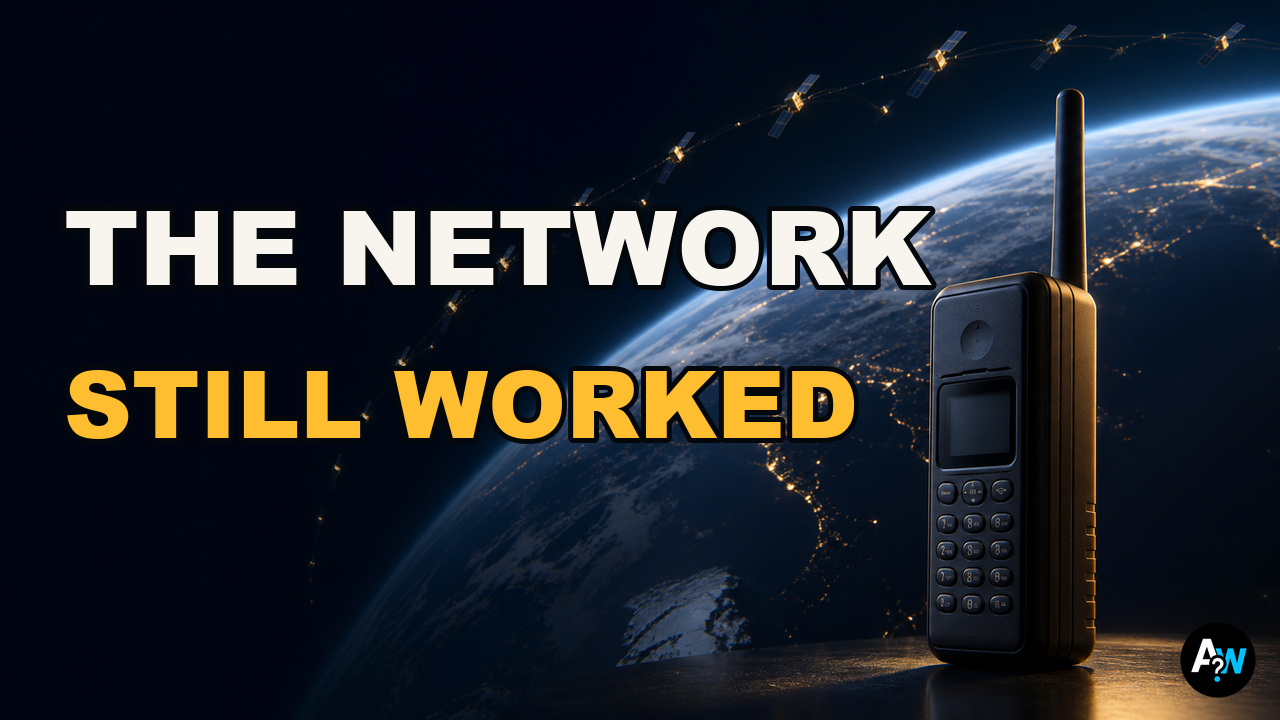
Premieres September 7, 2026 at 8:00 PM CDT. The video will play here after its scheduled YouTube release.
Read the evidence, decisions, and consequences behind this investigation.
The question: A Five-Billion-Dollar Network for Twenty-Five Million
Why was Iridium’s five-billion-dollar network sold for just twenty-five million?
The original company spent roughly five billion dollars developing and deploying a telephone network that could reach across oceans, deserts, and the poles.
Then Iridium L L C filed for bankruptcy about nine months after commercial voice service began.
In two thousand, a new investor group bought specified operating assets for twenty-five million dollars—about half a cent for every dollar the system had cost to develop and deploy.
And here is the strange part: the network operated within the performance range Iridium had expected, although toward its disappointing lower end.
The company that paid to build it failed, but the company that bought the assets cheaply found customers who truly needed the service.
So this was not a five-billion-dollar machine simply becoming worthless.
It was a failed five-billion-dollar business model being separated from a still-useful machine.
Seventy-Seven Satellites
In nineteen eighty-seven, Motorola engineers BARE-ee BUR-tih-gur, Ray LEE-oh-pold, and Ken PEE-tur-sun developed the Iridium concept in Chandler, Arizona.
Their original design called for seventy-seven satellites, matching Iridium's atomic number.
Engineers later reduced the operating constellation to sixty-six satellites, but the name survived.
Unlike a single satellite parked high above one region, Iridium would use a moving web of cross-linked, low-Earth-orbit satellites.
A call could pass from satellite to satellite around the planet, reaching oceans and polar regions beyond ordinary terrestrial networks.
That architecture turned motion into coverage.
As one satellite moved toward the horizon, the network could hand the connection to the next satellite overhead, then keep routing the call through the constellation.
The result was not simply a long-distance phone.
It was telephone infrastructure suspended around the Earth, built to reach the blank spaces between terrestrial towers.
Motorola established Iridium as a separate entity in nineteen ninety-one and brought together international investors and telecommunications companies to help build and operate it.
The first five satellites launched from VAN-den-burg on May fifth, nineteen ninety-seven.
By the time commercial voice service began on November first, nineteen ninety-eight, Iridium had spent roughly a decade turning a drawing-board idea into an operating global system.
But during that decade, the ground moved.
The Market Arrives First
When Iridium was conceived, its plan treated premium international travelers as a major customer market.
While the constellation was being built, terrestrial cellular coverage expanded rapidly, and ordinary mobile phones became smaller and cheaper.
By May nineteen ninety-nine, The Washington Post reported that an Iridium handset sold for two thousand three hundred dollars, while international calls cost roughly four dollars per minute.
The satellite service also needed a clear line of sight to a moving satellite.
That made dependable service difficult indoors, between tall buildings, or in obstructed vehicle environments without an external antenna.
These limits were known to engineers, managers, lenders, and sophisticated investors. The later court record does not support a story in which Motorola secretly hid one fatal flaw.
The problem was the combination.
Iridium needed many premium customers just as cheaper cellular service was becoming good enough for most of them.
And when the system finally opened, the business around the satellites was not ready enough to overcome that disadvantage.
A Global Launch with Almost No Customers
Handsets were scarce, distributors lacked training, gateway partners lagged on marketing, and software still had bugs.
The later bankruptcy-court record says marketing executive Leo MON-dayl wanted more time to fix launch problems, while chief executive Edward sty-AH-noh pushed to activate service. But the court did not find that this decision alone caused the collapse.
At the end of nineteen ninety-eight, Iridium had about three thousand subscribers.
By March thirty-first, nineteen ninety-nine, it had ten thousand two hundred ninety-four.
Contemporary reporting said the original business needed roughly five hundred thousand subscribers to break even.
It was not merely missing a target.
It was operating a globe-spanning machine with a customer base that could fit inside a small arena.
Iridium L L C filed for Chapter Eleven on August thirteenth, nineteen ninety-nine, about nine months after commercial voice service began.
The court later concluded that no single factor had been proven to explain the failure. Competition, price, service limits, launch execution, distribution, financing, and operating costs belonged to one tangled story.
That matters because saying satellite phones failed is the wrong answer.
The technology operated within the range Iridium had expected, even if performance was toward the disappointing end.
What failed was the original company's ability to find enough paying customers to carry the capital and operating burden wrapped around it.
Save It or Bring It Down
Service continued during bankruptcy negotiations, then stopped in March two thousand.
Motorola began planning to decommission the constellation, although the Federal Communications Commission says the schedule had not been finalized when bids were entertained.
That meant a working global network of sixty-six operating satellites could be deliberately removed from service. But the popular story that the rescue closed only hours before destruction is not supported by that primary record.
Retired aviation executive Dan kuh-LOO-see saw a different ending.
According to Smithsonian Air and Space Magazine's account, he assembled a small investor group and negotiated with creditors, Motorola, and government users to keep Iridium alive.
The rescue required more than finding people willing to write a check.
Motorola wanted protection from future liabilities, creditors had to accept a fraction of the original investment, and the new owners needed enough committed usage to make continued operation credible.
kuh-LOO-see's group was therefore assembling a new business around the satellites at the same time it was trying to acquire specified assets.
The United States Department of Defense had a practical reason to help: Iridium offered mobile satellite coverage across the entire globe, including places other systems could not reliably reach.
Defense support did not rescue Iridium by itself, but a service commitment and, according to the Smithsonian account, indemnity support helped make the deal workable.
In November two thousand, the bankruptcy estate accepted a twenty-five-million-dollar bid from Iridium Satellite L L C, including six and a half million dollars in cash.
The acquisition closed on December twelfth, two thousand.
The buyers were not repaying the approximately five billion dollars already spent developing and deploying the system.
They were acquiring specified distressed assets after the original debtor's investment and debt burden had been left behind.
The Same Satellites, Different Economics
The successor left the original debt burden behind, reduced staffing and gateway costs, and hired BOH-ing to operate the constellation more cheaply.
The Federal Communications Commission reported successor operating costs of about seven million dollars per month and an estimated break-even point near sixty thousand subscribers.
That estimate was almost an order of magnitude below the roughly five hundred thousand subscribers reported for the original plan.
Bankruptcy had not changed the satellites' orbit, but it had changed how much revenue the business needed before those satellites could support a company.
Then the successor changed the customer.
Instead of treating every international business traveler as a likely buyer, it focused on military, maritime, aviation, emergency, humanitarian, industrial, and remote users.
For those customers, a phone that required open sky was not merely a defective version of a city cell phone.
It was a connection in places where the alternative might be no connection at all.
A two-year, seventy-two-million-dollar Defense Department airtime contract covered up to twenty thousand government users and supplied dependable anchor revenue.
Commercial service relaunched at the end of March two thousand one.
By the end of two thousand four, the successor reported about one hundred fourteen thousand subscribers and positive earnings before interest, taxes, depreciation, and amortization.
The customer base was still tiny compared with the mass market once imagined.
But it was large enough for a company that no longer had to earn back the original five-billion-dollar development and deployment cost.
What Twenty-Five Million Bought
The successor's corporate lineage eventually became today's Iridium Communications and replaced the first-generation satellites with a newer constellation.
For full-year two thousand twenty-five, Iridium reported two million five hundred thirty-seven thousand billable subscribers, eight hundred seventy-one point seven million dollars in revenue, and one hundred fourteen point four million dollars in net income.
Those are issuer-reported current company results, not a retroactive valuation of the original network.
In June two thousand twenty-six, Rocket Lab announced an agreement to acquire Iridium. As of Iridium's July twenty-second update, the transaction remained pending and was expected to close in mid-two thousand twenty-seven, subject to Iridium stockholder approval and other closing conditions.
The irony is almost perfect.
Iridium's original investors financed the risky part: invention, satellites, launches, gateways, software, and a global operating system.
The bankruptcy buyer received that engineering achievement after the market had already rejected the assumptions used to pay for it.
The twenty-five-million-dollar price did not mean the metal in orbit was suddenly worth only twenty-five million dollars.
It meant those specified assets, with their enormous operating obligations and failed mass-market plan, were worth only what a buyer could make them earn after bankruptcy.
The answer: Why Iridium Sold So Cheaply
So, why was Iridium's five-billion-dollar satellite network sold for just twenty-five million dollars?
Because bankruptcy buyers were not purchasing the original investors' cost basis or debt.
They were purchasing a working but distressed network whose original mass-market customer plan could not support its costs.
Leaving that capital burden behind, cutting operating expenses, and targeting military and remote users changed the same network from an impossible mass-market bet into a viable specialist service.
Iridium sold for twenty-five million dollars because the technology had value—but only after bankruptcy left behind the price of building it and the successor stopped asking the wrong customers to pay.
Stay sharp, Stay curious. And always ask why, guys.
Follow the record.
What did this story make you question?
Comments are reviewed before they appear publicly. Your email is optional and never published.