
Why Did Buying His Own Rival Bankrupt the Founder of Popeyes?
Al Copeland’s purchase of Church’s Chicken created a bigger restaurant empire—and a debt structure that ultimately cost him control of Popeyes.
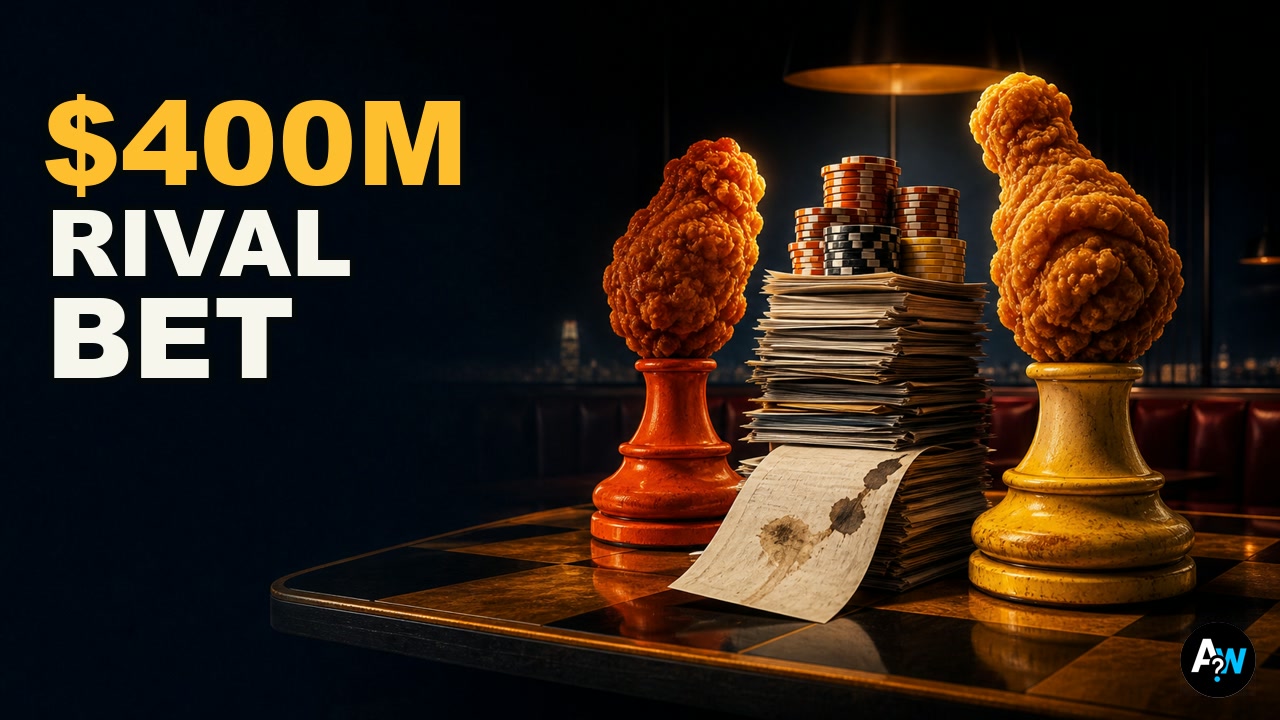
Premieres August 10, 2026 at 8:00 PM CDT. The video will play here after its scheduled YouTube release.
Read the evidence, decisions, and consequences behind this investigation.
The question
Why did buying his own rival bankrupt the founder of Popeyes? In nineteen eighty-nine, Al Copeland -- the man who'd built Popeyes from nothing -- spent a fortune he didn't have to buy his own biggest competitor, Church's Chicken. Two years later, the debt from that single deal cost him control of both companies. But buried inside that wreckage was one decision Copeland had made years earlier -- and it would go on to quietly pay his family for the next twenty-two years. That part comes later. First, the chicken restaurant that failed within days of opening.
The Restaurant That Failed
Years before any of this, at eighteen years old, Al Copeland sold his car to buy a small doughnut shop from his brother in New Orleans. He spent about a decade building it into a modest success. Then, in nineteen seventy-two, in the small town of Arabi, Louisiana, just outside New Orleans, Copeland used those doughnut profits to open a new restaurant. He called it Chicken on the Run. It didn't work -- a Kentucky Fried Chicken nearby was already established, and Copeland's shop couldn't compete on the same recipe everyone already knew. Four days later -- most business owners would have simply closed the doors -- Copeland reopened the same restaurant under a new name and a new recipe: spicier, Cajun-seasoned, nothing like the KFC down the street. He called it Popeyes. Copeland said he named it after Gene Hackman's hard-nosed detective in The French Connection, which had just won Best Picture the year before -- not, as many assume, after the cartoon sailor. This time, it worked. The lesson Copeland seemed to take from it -- that you beat a bigger competitor by being bolder, not more cautious -- would define the rest of his career.
Building an Empire
Copeland started franchising Popeyes in nineteen seventy-six. Over the next thirteen years, the spicier chicken that had barely survived its first four days grew into roughly eight hundred restaurants across the country, making Popeyes the third-largest fried chicken chain in America -- behind only KFC and one other name. That other name sat directly ahead of Popeyes on the list, and it was personal: Church's Fried Chicken, the second-largest chain in America. Church's had been founded not far from Popeyes' own home turf, and for years the two chains had competed directly for the same customers in the same Southern markets. Copeland didn't just want to catch Church's. He wanted to own it outright.
The Rival
In February of nineteen eighty-nine, Copeland made his move. His company acquired Church's Chicken outright, in a deal worth nearly four hundred million dollars. Copeland financed almost the entire deal with debt -- high-interest junk bonds, the same instrument fueling the era's biggest corporate buyouts. In plain terms, that meant borrowing heavily against the future earnings of the very company he was buying, and selling that debt to investors willing to accept the risk in exchange for a high interest rate. It's a bet that only pays off if the combined business generates enough cash, fast enough, to keep making those interest payments. Combine Popeyes and Church's, the thinking went, and you'd have a company big enough to go after KFC itself -- as long as the bet held.
The Deal Comes Due
It didn't work out that way. Months after the acquisition closed, the junk-bond market collapsed nationwide. The refinancing Copeland had been counting on to manage the debt simply wasn't there anymore. The bet the whole deal depended on had already started to come apart before the two chains had even finished becoming one company. Meanwhile, running two large fried-chicken chains as one company turned out to be harder than buying them. Popeyes and Church's had different menus, different franchisees, different regional identities -- merging them cost more and moved slower than the deal's financing had assumed. None of that was optional or postponable. Interest payments kept coming whether the integration was ready or not. And they were coming faster than the combined company could generate cash to cover them.
Bankruptcy
By November of nineteen ninety, Copeland's company was already in default on three hundred ninety-one million dollars in debt. By April of nineteen ninety-one, with that debt now exceeding four hundred million dollars, creditors forced Copeland's holding company into Chapter Eleven bankruptcy. Copeland fought through the reorganization to keep some piece of what he'd built. He lost that fight. In October of nineteen ninety-two, a bankruptcy court approved a plan that handed ownership to the company's creditors and bondholders. The business that emerged -- eventually renamed AFC Enterprises -- belonged to them, not to him. The man who had built Popeyes out of a failed restaurant no longer owned Popeyes. He no longer owned Church's either. Nineteen years of work -- from a four-day pivot in Arabi to roughly eight hundred restaurants -- gone in a single deal that was supposed to make him untouchable, not erase him.
The One Thing He Kept
Except for one piece. In nineteen eighty-four, five years before any of this, Copeland had founded a separate, smaller company called Diversified Foods and Seasonings. Its entire job was supplying the proprietary Cajun spice blend that made Popeyes chicken taste like Popeyes chicken. That company was never part of the bankrupt holding company. Copeland kept it entirely to himself, straight through the collapse. Whether that was a deliberate piece of protective foresight or simply how the businesses happened to be structured is something the record doesn't fully settle. But the practical effect is not in dispute: every Popeyes restaurant, under its new owners, was contractually required to keep buying that exact spice blend from the one company Copeland still controlled.
Paid For Twenty-Two Years
So starting in nineteen ninety-two, the very company that had taken Popeyes from Al Copeland began paying him for it -- every year, just to keep the chicken tasting right. Roughly three point one million dollars a year, for the next twenty-two years. Copeland had lost the name over the door, the restaurants, the franchise agreements, all of it -- but he still owned the one ingredient none of that could work without. Al Copeland died in two thousand eight, at sixty-four. The payments didn't stop. They simply kept going -- to his estate, and to the family he left behind. Then, in twenty fourteen -- six years after his death -- Popeyes' corporate parent finally bought the recipe rights outright from Copeland's family for forty-three million dollars, ending the arrangement for good. Add up twenty-two years of roughly three point one million dollars in annual payments -- around sixty-eight million dollars total -- and that final forty-three million dollar sale, and Copeland's family collected something in the neighborhood of one hundred eleven million dollars for that one spice blend alone. That combined total isn't a figure any single source states outright -- it's a back-of-envelope estimate built from those two publicly reported numbers.
The answer
So why did buying his own rival bankrupt the founder of Popeyes? Because Copeland tried to make his company untouchable by financing a rival's takeover almost entirely with debt, and when the market that debt depended on collapsed out from under him, it took both companies down with it -- and him along with them. That's the whole first half of the answer, and it's the half every cautionary tale about overleveraged buyouts already tells. The second half is the one this story actually earns: the same nineteen eighty-nine decision that cost him everything also happened to protect the one thing that outlasted it. Copeland never got Popeyes back. He never ran a restaurant chain again at that scale. The company is currently owned by Restaurant Brands International, and Church's -- now Church's Texas Chicken -- has changed hands several times since, most recently to High Bluff Capital Partners. Neither of them had anything to do with what happened to Copeland in nineteen ninety-one, and neither should be read as connected to it. But for twenty-two years, whoever did own Popeyes had no choice but to keep paying the man they'd taken it from -- because they could put his name on a sign and his recipe in a fryer, but they couldn't make the chicken taste like his without him. The buyout that ended Al Copeland's career as a restaurant owner also, almost as an afterthought, built the one asset that kept paying his family long after everything else was gone.
Follow the record.
What did this story make you question?
Comments are reviewed before they appear publicly. Your email is optional and never published.