
Why Was Kodak Forced to Abandon 16.5 Million Instant Cameras?
A patent injunction ended Kodak’s U.S. instant-camera and film system, leaving roughly 16.5 million cameras and owners without a continuing supply of matching film.
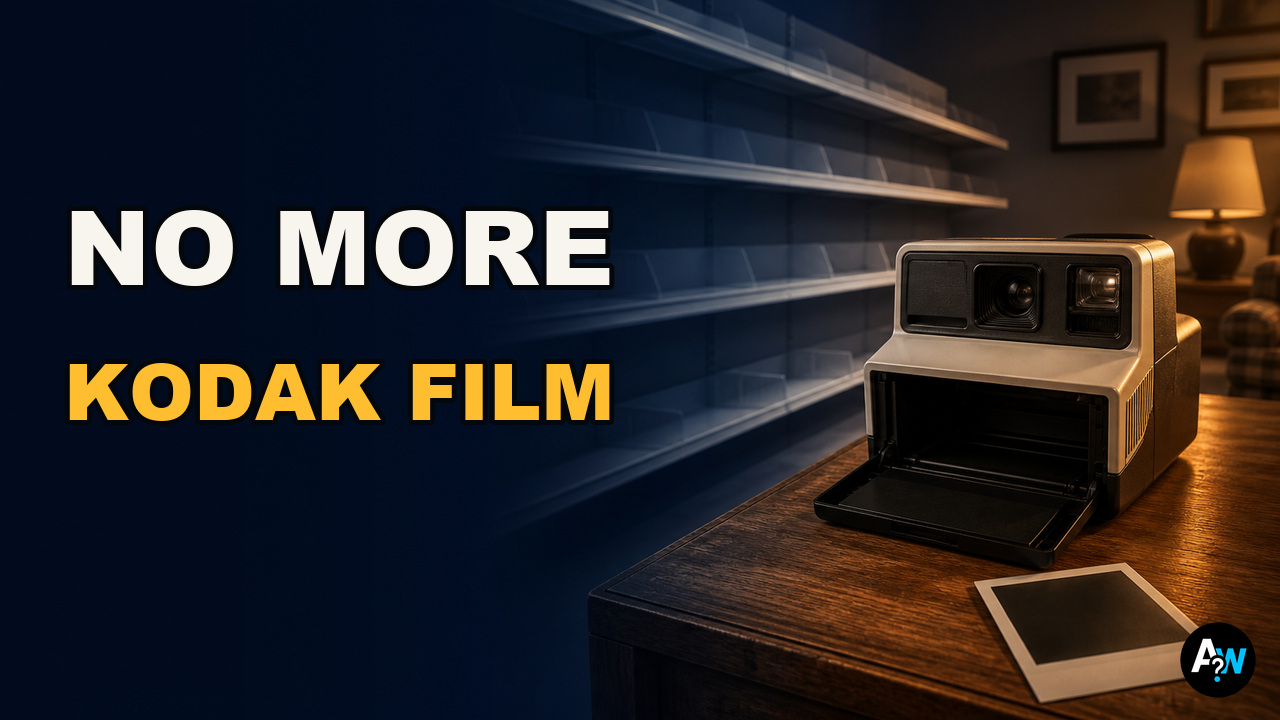
Premieres August 31, 2026 at 8:00 PM CDT. The video will play here after its scheduled YouTube release.
Read the evidence, decisions, and consequences behind this investigation.
The question: Millions of Cameras, No More Film
Why Was Kodak Forced to Abandon Sixteen Point Five Million Instant Cameras?
Not because customers stopped taking pictures.
Not because every camera suddenly broke.
Kodak was forced out because a federal court found claims from seven Polaroid patents valid and infringed, then imposed a permanent injunction.
When that injunction took effect on January ninth, nineteen eighty-six, Kodak withdrew its instant cameras and the matching film that made them work.
Contemporary reporting put the stranded installed base at roughly sixteen point five million cameras and owners.
A camera body could remain physically intact.
But for U.S. owners, once the remaining film ran out, the cameras became boxes waiting for a refill that was no longer available in their market.
This was not merely a lawsuit about products Kodak hoped to sell tomorrow.
It reached backward into millions of products people had already bought.
And the bill would arrive three times: at Kodak, at its customers, and finally at Polaroid.
Act One — Polaroid Makes the Picture Appear
Edwin Land publicly demonstrated instant photography in nineteen forty-seven, and Polaroid began commercial instant-camera sales in nineteen forty-eight.
There was an old connection between the eventual rivals: a National Academy of Sciences biography of Land identifies Kodak as Polaroid's first customer in nineteen thirty-four, when it bought polarizer sheet for camera filters.
Four decades later, that early customer would enter the product category most closely associated with Polaroid.
The trick was not just a clever camera body.
It required the camera, the film layers, and the developing chemistry to work as one coordinated system.
In nineteen seventy-two, Polaroid introduced the SX-seventy, whose self-contained print developed without the user peeling apart the photograph.
That elegant little square was also protected by a dense portfolio of camera and film patents.
Then Kodak entered the frame.
By nineteen seventy-five, Kodak reported about five billion dollars in sales, compared with roughly eight hundred thirteen million dollars for Polaroid.
Kodak was the larger company.
But corporate size would not decide this contest.
Act Two — Kodak Enters the Instant Fight
In April nineteen seventy-six, Kodak introduced two instant cameras: the hand-cranked EK-four and the battery-powered EK-six.
Contemporary list prices were about fifty-four dollars and seventy dollars.
Polaroid sued within days of the launch, alleging that Kodak's cameras and film infringed its patents and asking the court to stop them.
The lawsuit arrived almost as quickly as an instant print.
But Kodak's commercial commitment was already larger than a single model on a store shelf.
Its cameras depended on a matching Kodak film supply, meaning every camera sold also created a customer who would need future packs.
The more successful the launch became, the larger that dependent installed base could grow.
This is the decision point at the center of the story.
Kodak had entered a category built around a rival's patented camera-and-film system, and it chose to defend the validity and scope of its own design in court.
That does not mean Kodak simply copied every Polaroid invention.
The final liability judgment covered claims from seven patents, while other patent claims had different outcomes.
And in the later damages phase, the court found that Kodak's infringement was not willful.
So the accurate conflict is not, Kodak stole the instant camera.
It is that Kodak built and sold its own instant system, then lost the legal fight over specific valid patent claims that system infringed.
Act Three — An Instant Camera, a Very Slow Case
The product made pictures in minutes.
The case generated more than one thousand docket entries, seventy-five trial days, and an appellate appendix stretching eighteen thousand pages.
Those trial days ran from October nineteen eighty-one into February nineteen eighty-two, but Judge Zobel's liability decision did not arrive until October nineteen eighty-five.
By then, Kodak had spent nearly a decade building an installed base around a legal question that still had no final answer.
One upheld camera claim concerned a structure that kept part of the film's path protected from ambient light while processing fluid spread across the photograph.
The script does not need a chemistry lecture to explain the business danger.
For U.S. owners, Kodak had sold a closed system whose future usefulness depended on Kodak continuing to manufacture the matching instant film.
On October eleventh, nineteen eighty-five, Judge Rya W. Zobel issued a one-hundred-twenty-two-page decision holding claims from seven Polaroid patents valid and infringed and granting a permanent injunction.
Kodak tried to pause that order during appeal, but the Federal Circuit denied a stay.
The injunction took effect on January ninth, nineteen eighty-six.
The Federal Circuit affirmed the appealed validity and infringement rulings in April, and the Supreme Court declined review in October.
For Kodak, the legal runway had ended.
Act Four — The Injunction Leaves the Factory
Kodak ended its U.S. instant-camera and instant-film line as the injunction took effect.
That stopped future production, but it also created a problem in kitchens, closets, and family rooms across the country.
Contemporary reports described roughly sixteen point five million cameras sold and owners left without a continuing supply of fresh Kodak instant film.
Abandon does not mean Kodak confiscated those cameras.
It means the company withdrew the camera-film system, leaving the installed hardware functionally useless in the United States after existing film supplies disappeared.
Kodak first offered owners choices that included a disc-camera outfit, a fifty-dollar rebate coupon, or one share of Kodak stock.
Each choice treated the useless instant camera as something to be exchanged for a different Kodak relationship rather than restored to its original purpose.
What Kodak could not offer was the thing U.S. owners had expected when they bought the camera: a continuing supply of compatible instant film.
Owners challenged that response in court, and the original exchange program was enjoined while class litigation continued.
In nineteen eighty-eight, a court-approved settlement created cash and coupon compensation for participating U.S. owners.
Reports described three point four eight million checks mailed, more than one hundred six million dollars in cash, and rebate certificates with eighty-nine million dollars in issued face value.
The camera owners were not a side plot.
They were the reason an injunction against one manufacturer became a mass consumer event.
Act Five — Kodak's Bill Comes in Layers
Kodak recorded a four-hundred-ninety-four-million-dollar charge tied to shutting down instant photography and addressing customer remedies.
It also reported a one-hundred-ninety-four-million-dollar loss for the fourth quarter of nineteen eighty-five, described at the time as its first quarterly loss in records going back to nineteen thirty.
But the patent case cannot honestly carry every problem in Kodak's accounts.
Currency pressure and broader operating difficulties also hurt the company's results, and Kodak was pursuing wider restructuring.
So this story does not blame every planned job cut or every weak dollar of earnings on instant cameras.
And the four-hundred-ninety-four-million-dollar charge was not the same thing as the payment to Polaroid.
The damages phase continued for years after Kodak left the instant-camera market.
That delay matters because the largest headline number did not cause the nineteen eighty-six withdrawal.
The injunction forced the withdrawal first; the final damages payment arrived more than five years later.
In October nineteen ninety, the court initially ordered Kodak to pay nine hundred nine point five million dollars, including damages and interest.
A calculation correction later reduced the award to roughly eight hundred seventy-three million dollars.
Then, in July nineteen ninety-one, Kodak paid Polaroid roughly nine hundred twenty-five million dollars: the corrected award plus post-judgment interest.
The companies dismissed their pending damages appeals, ending a dispute that had lasted about fifteen years.
Three costs, three different buckets: Kodak's withdrawal charge, compensation for owners, and the final patent payment to Polaroid.
Act Six — The Giant and the Patent Wall
The ending is tempting to flatten into a fable about a giant losing to a smaller inventor.
Kodak really was the much larger company when it entered the market.
Polaroid really did hold the patent claims that ultimately forced Kodak's withdrawal.
But the sharper lesson is structural.
Kodak sold durable hardware whose usefulness in the United States depended on a legally vulnerable consumable.
When Kodak lost the right to make and sell that consumable, the value of cameras already in customers' hands collapsed with it.
The injunction did not have to touch each camera individually.
It only had to stop Kodak's film supply.
That is what turned a patent judgment at a federal courthouse into millions of useless consumer products.
And it is why the most important number in this story is not only the roughly nine-hundred-twenty-five-million-dollar payment.
It is the roughly sixteen point five million cameras and owners behind the contemporary estimate, showing that buying a machine does not guarantee access to whatever keeps that machine alive.
The answer: Why Kodak Abandoned the Cameras
So, why was Kodak forced to abandon roughly sixteen point five million instant cameras?
Because a federal court found specific valid Polaroid patent claims infringed and imposed an injunction that ended Kodak's instant-camera and film system.
Since those cameras depended on matching Kodak film, stopping that U.S. film supply stranded the installed base once supplies ran out.
Kodak was not forced to smash sixteen point five million cameras.
It was forced to stop making and selling the one thing that kept them useful in the United States.
Stay sharp, Stay curious. And always ask why, guys.
Follow the record.
What did this story make you question?
Comments are reviewed before they appear publicly. Your email is optional and never published.